
As Australian lighting assessment specialists, we predict the cumulative effects of artificial lighting before it is installed. Our modelling provides evidence-based insights that support compliance, reduce future light spill, and help planners and designers make informed decisions with confidence.
Predictive Cumulative Impact Modelling forecasts how proposed artificial lighting will interact with existing and future light sources across a landscape. By modelling cumulative lighting scenarios before development begins, we help projects meet planning and environmental requirements while balancing safety, functionality and design performance.
Our team develops detailed predictive models using photometric data, lighting design information, GIS analysis and environmental mapping. We simulate the intensity, distribution, spectrum and timing of proposed lighting, assessing how multiple sources combine over time to identify potential light spill, sky glow and impacts on sensitive environments before they occur.
We then turn predictions into practical design guidance. Our modelling supports informed decision-making by identifying opportunities to optimise luminaire selection, lighting layouts, optics, shielding, dimming strategies and operating schedules. The result is lighting that achieves project objectives while minimising cumulative environmental impacts, streamlining approvals and protecting the ecological rhythms of the night.
Networks
Industry Partnerships & Collaboration
12+
Years Combined Experience
Award Winning
Awarded Commendation in the 2025 IESANZ Lighting Awards
100%
5 Star Customer Reviews
Seeing the bigger picture before it’s built.
Cumulative light modelling reveals how all sources of light – existing and proposed – combine to shape the nocturnal environment. Nightjar’s predictive models quantify not just the contribution of a single development but the total skyglow, spill, and luminance shift across a landscape. This provides a true picture of change, grounded in data rather than assumption.
Every model begins with verified baselines from our Existing Conditions Assessments measured light levels, reflectances and atmospheric data that describe the current state of the night environment. From there, our process adapts to project stage and data availability.
At the pre-development stage, when detailed design information is not yet defined, we use target illuminance levels (lux per square metre), surface reflectances, and atmospheric conditions to predict how additional light will alter overall sky brightness. This early modelling helps identify potential receptor locations and areas most sensitive to change.
Once detailed design data is available, we move to photometric modelling. Using software we simulate proposed luminaires in context with the existing environment, modelling distributions, mounting geometries and spectral properties. The result is a cumulative light map that integrates all known sources, validated against DCCEEW’s National Light Pollution Guidelines for Wildlife (NLPGW), AS/NZS 4282, and relevant planning and environmental assessment frameworks.
By combining measured baselines with predictive modelling, Nightjar brings clarity to complexity, showing how new light interacts with what’s already there, and guiding designs that protect the integrity of the night.
Related Services

Evidence-Based Lighting Assessments
We assess the potential effects of artificial lighting on the surrounding environment, identifying impacts on sensitive receptors and demonstrating compliance with planning and environmental requirements.

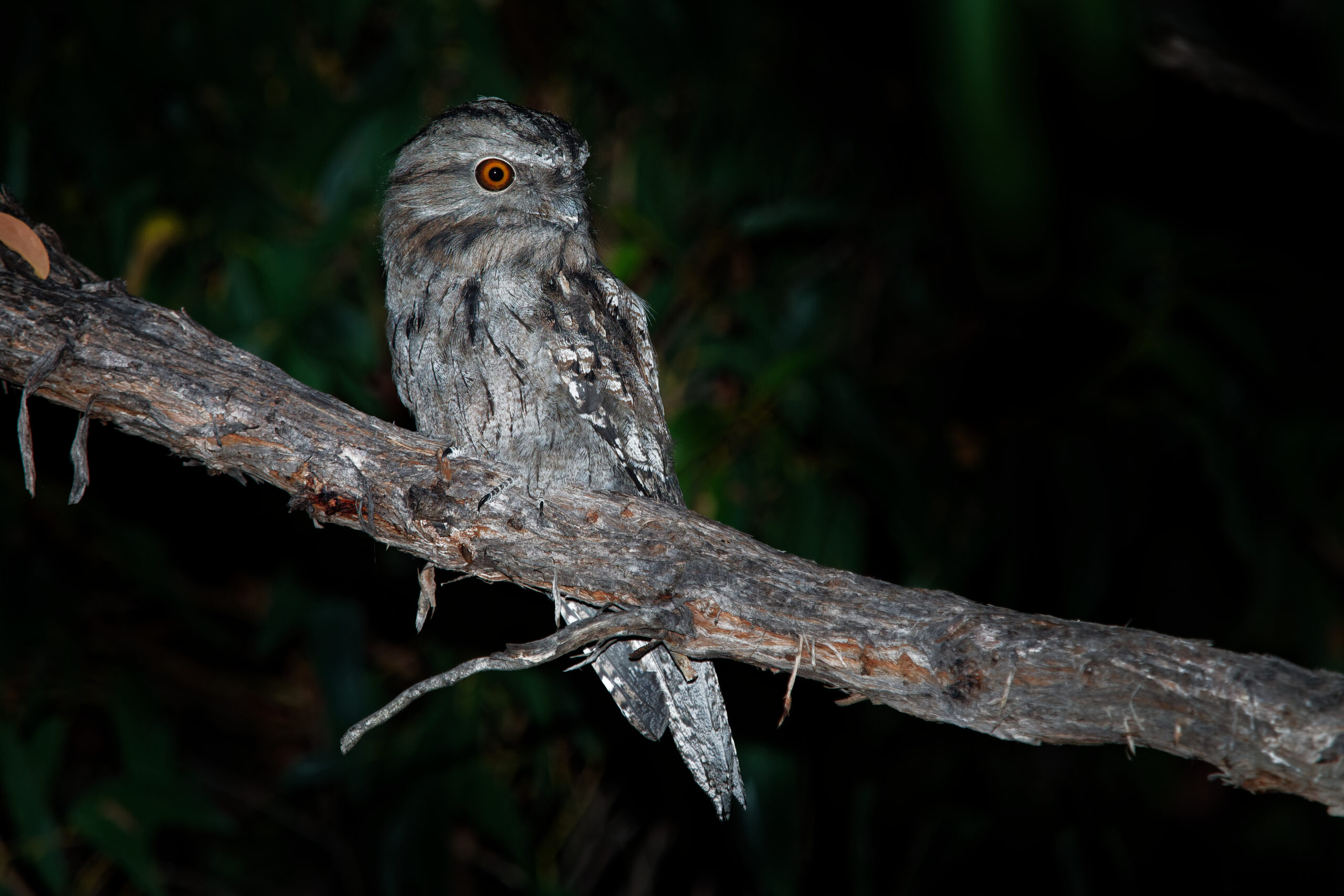
Protecting Wildlife
We design lighting solutions that minimise impacts on wildlife while meeting project requirements, helping protect sensitive habitats and support environmental compliance.
Proactive Light Management Strategies
We develop practical light management plans that reduce light spill, glare and environmental impacts, supporting compliance and responsible long-term lighting outcomes.

Understanding the Existing Light Environment
We assess existing nighttime light conditions to establish a reliable baseline for your project. Our surveys and analysis support informed design decisions, environmental approvals, and compliance.
We measure what the eye smooths over.
At Nightjar, we combine field measurement, calibrated imagery, and photometric modelling to make the invisible visible. Our approach bridges science, design, and ecology – translating complex data into clear, actionable insight. Every assessment is grounded in verified evidence and guided by environmental care, so decisions can be made with confidence and context.
With more than a decade of experience in lighting design and environmental compliance, we understand how projects move from concept to construction. That insight allows us to align ecological sensitivity with practical feasibility, helping teams meet regulatory requirements while protecting the night sky and the ecosystems beneath it.
Whether you need lighting design, compliance calculations, Revit automation, or environmental lighting assessments – we deliver precision, performance, and peace of mind.
